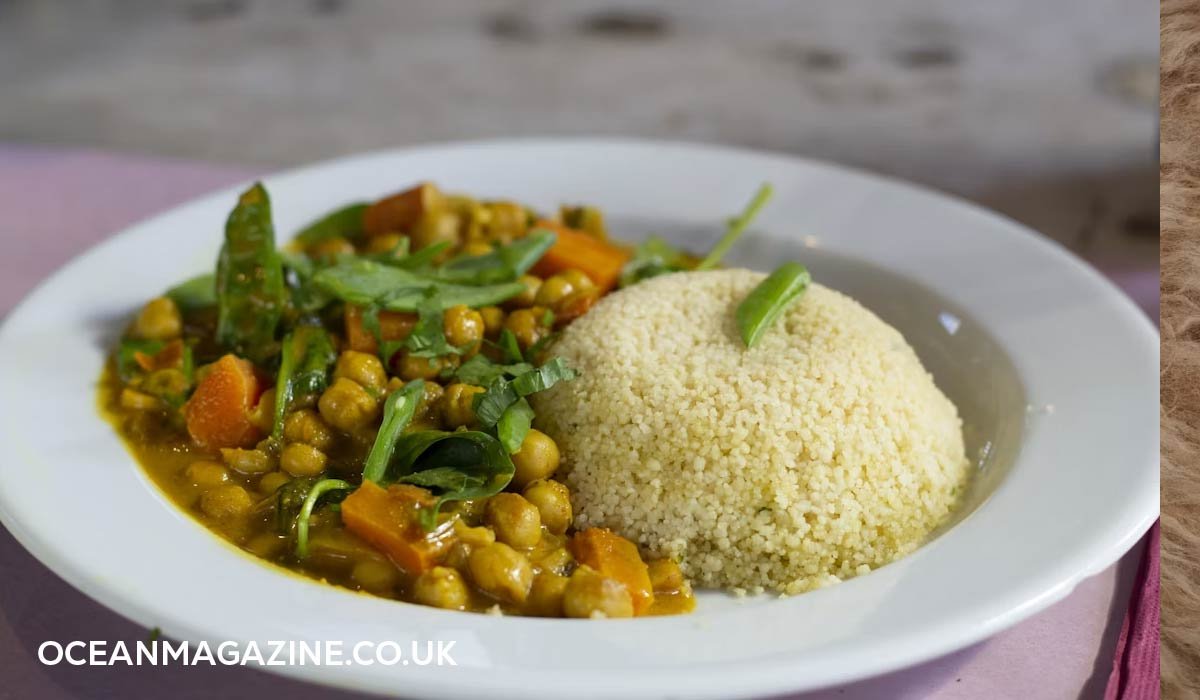
Have you ever seen a bowl of tiny golden grains and wondered whether they were rice, pasta, or something else? You were probably looking at kouskousi, which is more commonly known as couscous.
Kouskousi is light, mild, and easy to pair with other foods. You can serve it with a rich stew, mix it into a fresh salad, or combine it with vegetables, meat, chickpeas, nuts, or dried fruit.
In this guide, you will learn what kouskousi is, where it comes from, how the main types differ, and how to prepare it at home. You will also learn about its benefits, limitations, and common alternatives.
What Is Kouskousi?
Kouskousi is made from semolina, a coarse flour produced from durum wheat. Durum wheat is the firm type of wheat often used to make pasta.
Although kouskousi looks like a grain, it is closer to pasta. It is made by mixing semolina with water and shaping it into tiny granules.
Traditional kouskousi is rolled by hand and steamed. Instant couscous has already been steamed and dried, so you only need to add hot water or broth.
People use kouskousi as:
- A quick alternative to rice or pasta
- A base for stews
- A side dish for meat or vegetables
- An ingredient in salads
- A simple way to use leftover vegetables or herbs
Its mild flavor is one of its main strengths. It absorbs sauces, broth, spices, and dressings without overpowering the rest of the meal.
The Origin of Kouskousi
Kouskousi has deep roots in North Africa, especially in countries such as Morocco, Algeria, Tunisia, and Mauritania. It has been part of the region’s cooking traditions for many generations.
The exact place and date of its invention are not known. However, it is widely linked to the food traditions of the Maghreb, the North African region along the Mediterranean coast.
Traditional preparation takes time and skill. Semolina is moistened, rolled into small granules, sifted, and steamed over a pot of broth or stew. The process may be repeated several times to create a soft and fluffy texture.
Kouskousi is also connected with family meals, celebrations, and hospitality. It is often served on a large shared dish, allowing everyone at the table to eat together.
This shared style of eating is part of what makes kouskousi more than a simple side dish. It can represent family, tradition, and community.
Main Types of Kouskousi
You may find several types of couscous in shops. They differ in size, texture, cooking time, and how they are usually served.
Traditional Fine Couscous
This is the small, light couscous commonly used in North African cooking. It is traditionally steamed and fluffed several times.
Its delicate texture makes it a good match for stews because it absorbs broth and sauce well.
Instant Couscous
Instant couscous is the easiest type to prepare. It has already been partly cooked and dried.
You normally place it in a bowl, add boiling water or broth, cover it, and leave it for a few minutes.
Whole-Wheat Couscous
Whole-wheat couscous is made with more of the wheat grain than standard refined couscous. It usually has a slightly firmer texture and a stronger taste.
It may also contain more fiber, but the exact amount depends on the product. Check the nutrition label if fiber is important to you.
Pearl Couscous
Pearl couscous is larger and rounder than traditional couscous. It has a chewy texture and is usually boiled like pasta.
Despite the name, pearl couscous is not exactly the same as fine North African kouskousi. The two may not work equally well in every recipe.
Other Regional Varieties
Some regional versions use larger pieces or different grains. Cooking methods and names can also vary from one country to another.
Always read the instructions on the package. A type that needs soaking may not cook properly if you treat it like pearl couscous, and the same is true in reverse.
How Kouskousi Works
Dry kouskousi contains very little moisture. When you add hot water, broth, or steam, the granules absorb the liquid and soften.
You can think of it like a small sponge. It takes in both moisture and flavor, which is why broth often gives better results than plain water.
Fine instant couscous usually needs only soaking. Pearl couscous normally needs to simmer in a pan.
Traditional kouskousi takes more work. The granules are steamed, separated, moistened, and steamed again. This helps keep them light instead of sticky.
How to Prepare Instant Kouskousi
Always check the package first because different brands may need different amounts of liquid.
- Measure the kouskousi. Put the amount you need in a heatproof bowl. About half a cup of dry couscous per person is often enough for a side dish.
- Heat the liquid. Bring water or broth to a boil. Add a little salt unless the broth is already salty.
- Pour it over the couscous. Use the amount listed on the package. Too much liquid can make the couscous soft and sticky.
- Cover the bowl. Use a lid or plate to keep the steam inside.
- Let it rest. Most instant couscous needs about five minutes, but follow the package directions.
- Fluff it with a fork. Separate the granules gently. Avoid heavy stirring, which can create lumps.
- Add flavor. Mix in olive oil, butter, lemon juice, herbs, spices, vegetables, or nuts.
Taste the kouskousi before serving. A little salt, lemon juice, or fresh parsley can make a big difference.
Main Benefits of Kouskousi
It Is Quick to Prepare
Instant kouskousi can be ready in a few minutes. You only need a bowl, hot liquid, and a fork.
This makes it useful when you want a warm side dish without waiting for rice or potatoes to cook.
It Works With Many Foods
Kouskousi has a mild flavor, so it fits into many types of meals. You can serve it with spicy stews, grilled meat, roasted vegetables, beans, or fresh herbs.
The same packet can become a warm dinner, a cold salad, or a simple lunch.
It Can Be Part of a Balanced Meal
Kouskousi mainly provides carbohydrates. Your body uses carbohydrates as a source of energy.
To make the meal more balanced, add vegetables and a source of protein. For example, you could combine kouskousi with chickpeas, roasted peppers, cucumber, and yogurt.
It Is Easy to Store
Dry couscous is simple to keep in a cupboard and does not take up much space. It can be useful when you need a quick meal from basic ingredients.
Store it in a sealed container away from heat and moisture. Follow the expiry and storage instructions on the package.
It Helps You Use Leftovers
Kouskousi works well with small amounts of leftover food. Roasted vegetables, cooked chicken, herbs, or beans can all be mixed into it.
This can help you turn a few ingredients into a complete meal instead of letting them go to waste.
Possible Limitations and Things to Consider
Kouskousi is made from wheat, so it normally contains gluten. It is not suitable for people with coeliac disease or anyone who has been advised to avoid gluten.
Rice, millet, buckwheat, or certified gluten-free quinoa may be better choices for a gluten-free diet.
Standard couscous is usually made from refined wheat. If you want more fiber, look for whole-wheat couscous and compare the labels.
The way you prepare it also matters. Plain kouskousi may be low in fat, but large amounts of butter, oil, fatty meat, or salty broth can change the overall meal.
Portion size is worth thinking about too. Because couscous is soft and light, it can be easy to serve more than you need.
Before buying or preparing it, ask yourself:
- Do I need a gluten-free option?
- Do I prefer a soft or chewy texture?
- Is the product instant or meant to be boiled?
- Does it contain added seasoning or salt?
- Am I serving it as a side dish or a full meal?
Kouskousi Compared With Other Foods
Kouskousi vs. Rice
Both kouskousi and rice have mild flavors and work well with meat, vegetables, and sauces.
Instant couscous is often quicker to prepare. Rice, however, offers more natural varieties and is usually gluten-free.
Choose rice if you need a gluten-free option. Choose couscous if speed and convenience matter more.
Kouskousi vs. Quinoa
Quinoa has a firmer texture and a slightly nutty taste. It is naturally gluten-free, although people with strict dietary needs should still check for cross-contact warnings.
Kouskousi is softer and often works better with broth-based dishes. Quinoa may suit you if you prefer a firmer texture or need a gluten-free base.
Kouskousi vs. Pasta
Kouskousi and pasta are often made from the same type of wheat. The main difference is their size and how they are served.
Pasta is usually boiled and covered with sauce. Fine couscous is often soaked or steamed and served under stews or mixed with other ingredients.
Choose pasta when you want a firmer bite. Choose kouskousi when you want a lighter base that blends easily with other foods.
Kouskousi vs. Bulgur
Bulgur is made from cracked wheat that has been partly cooked and dried. It has a firmer, grainier texture than couscous.
Both contain gluten. Bulgur may work better in salads that need more bite, while kouskousi is better when you want a softer texture.
Final Thoughts
Kouskousi is a simple and flexible food made from semolina. Traditional versions are rolled and steamed, while instant couscous gives you a much faster option.
You can serve it with stews, meat, vegetables, chickpeas, herbs, nuts, or dried fruit. Its mild flavor makes it easy to adapt, but remember that it contains gluten.
A good place to start is with instant kouskousi cooked in broth. Add roasted vegetables, chickpeas, lemon juice, and fresh herbs for an easy meal.
Frequently Asked Questions
Is kouskousi suitable for vegetarians?
Plain kouskousi is usually suitable for vegetarians because it is mainly made from semolina and water. However, it may be prepared with meat broth or served with meat. Check the ingredients on packaged products and ask how it is cooked when ordering at a restaurant.
Is kouskousi expensive or difficult to find?
Instant couscous is available in many supermarkets, food shops, and online stores. The price depends on the brand, package size, and where you live. Standard instant couscous is usually easier to find than handmade or imported varieties.
Is kouskousi easy to prepare?
Yes, instant kouskousi is easy for beginners. In most cases, you add boiling water or broth, cover it, wait a few minutes, and fluff it with a fork. The main mistake to avoid is adding too much liquid.
Is kouskousi safe for a gluten-free diet?
No. Standard kouskousi is made from wheat and contains gluten. It is not suitable for people with coeliac disease or anyone who needs to avoid wheat. Check the label carefully if you are buying a grain-based alternative.
What can you serve with kouskousi?
You can serve kouskousi with vegetable stew, chicken, lamb, fish, chickpeas, beans, or roasted vegetables. For a cold dish, mix it with cucumber, tomato, herbs, and lemon dressing. It works well in many meals where you might otherwise use rice or pasta.