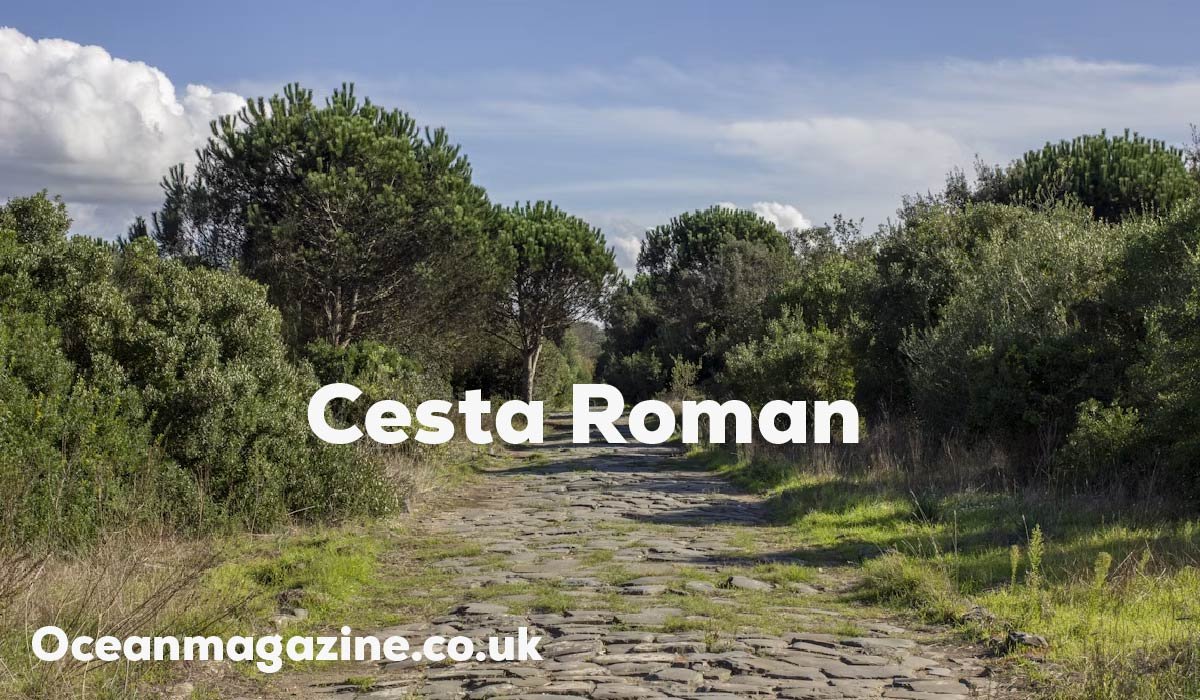
Have you ever wondered how ancient Rome controlled such a large empire without cars, trains, or airplanes? One important answer is its road network. The term Cesta Roman is often used online to describe Roman roads. It is not a traditional Latin phrase, but it usually refers to the roads built across the Roman Empire. The Romans called these roads viae Romanae.
These routes connected cities, ports, military camps, farms, and distant provinces. They helped soldiers move, officials send messages, and traders carry goods. In this guide, you will learn what Cesta Roman means, how Roman roads were built, why they mattered, and where their influence can still be seen.
What Is Cesta Roman?
Cesta Roman is a modern term for the road system built and used by the Romans. The word cesta means “road” or “journey” in several Slavic languages, while “Roman” links the phrase to ancient Rome.
Historians do not usually use Cesta Roman as an official term. They are more likely to say “Roman roads” or use the Latin phrase viae Romanae.
The Roman road system included more than large stone highways. It also covered local tracks, military routes, city streets, bridges, and roads leading to farms or ports.
These roads connected places such as:
- Major cities
- Military forts
- Ports
- Market towns
- Farming areas
- Government centers
You can compare the system to a modern highway network. The roads were not all built in the same way, but together they made travel and communication much easier.
Cesta Roman is especially interesting to students, travelers, walkers, history lovers, and anyone curious about ancient engineering.
The History of Cesta Roman Roads
Roman roads developed as Rome gained control of more land. The army needed reliable routes for moving soldiers, food, weapons, and other supplies.
One of the earliest and best-known Roman roads was the Via Appia, also called the Appian Way. Construction began in 312 BCE under the Roman official Appius Claudius Caecus.
The road first connected Rome with Capua. It was later extended farther into southern Italy and became an important route for military travel, trade, and communication.
As Roman territory grew, new roads were built across Europe, North Africa, the Balkans, and western Asia. The network expanded over many centuries.
There was no single project that created every Roman road. Emperors, military units, local officials, towns, and regional authorities all played a part in building or repairing different routes.
Main Types of Cesta Roman Roads
Not every Roman road had the same size, surface, or purpose. Some were major public routes, while others were simple local roads.
Public Roads
Public roads connected important cities, ports, and regions. They were used by soldiers, merchants, officials, messengers, and ordinary travelers.
These routes were often wider and better maintained than smaller local roads.
Military Roads
Military roads linked forts, border areas, supply centers, and strategic locations. They allowed the Roman army to move more quickly through controlled territory.
These roads were especially important in areas where Rome needed to defend its borders.
Local Roads
Local roads connected villages, farms, markets, and private estates with larger routes.
Many of these roads were simpler than major highways. They may have been made from packed soil, gravel, or local stone.
City Streets
Roman towns and cities also had planned streets. Some included raised pavements, drains, stepping stones, and stone surfaces.
City streets supported daily travel, shopping, public events, and the movement of carts.
Important Features of Roman Roads
Roman builders used several practical features to make roads safer and more reliable.
Strong Foundations
Major roads were often built on prepared ground. Workers used stone, gravel, sand, or crushed material to create a stable base.
The exact design depended on the location and the materials available nearby.
Drainage
Water can quickly damage a road. Roman engineers reduced this problem by giving some roads a raised or curved surface.
Rainwater could then flow toward the edges and into side ditches instead of collecting in the middle.
Bridges
Roman builders constructed bridges where roads crossed rivers, valleys, or difficult ground.
Some Roman bridges still survive, although many have been repaired or changed over time.
Milestones
Milestones were stone markers placed beside important roads. They often showed distances and sometimes included the name of an emperor or official.
These markers helped travelers understand where they were and how far they had to go.
Direct Routes
Roman roads are often known for following straight lines. Builders usually chose direct routes when the landscape allowed it.
However, they did not ignore natural obstacles. Roads sometimes curved around steep hills, marshes, rivers, or unstable land.
How Cesta Roman Roads Were Built
Roman road construction varied across the empire. There was no single method used for every road.
First, surveyors studied the land and selected a route. They considered the destination, terrain, water crossings, nearby settlements, and local materials.
Workers then cleared the path and prepared the ground. On major roads, they sometimes dug a trench and filled it with layers of stone and gravel.
The lower layers created support and helped stop the surface from sinking. Smaller stones or compacted material were then added above them.
The top surface depended on the road’s purpose and location. Some roads were paved with large stone blocks, while many others had gravel or hardened earth surfaces.
Workers also built drainage channels, retaining walls, bridges, and raised sections where needed.
The result was a road designed for regular use rather than a simple path worn into the ground.
How the Roman Road System Worked
A Roman road was part of a wider travel and communication system.
Roads connected towns, military bases, ports, and government centers. Travelers could find inns, settlements, supply points, and places to change animals along some major routes.
The Roman government also used an official transport and message system called the cursus publicus. It allowed authorized officials and messengers to travel on government business.
This system did not make travel fast by modern standards. It did, however, make long-distance communication more organized and dependable.
You can compare it to a delivery network. The roads were the main routes, while bridges, stations, towns, and stopping places helped keep people and messages moving.
How to Explore a Cesta Roman Route
You can still visit Roman road remains in many countries. Some are inside cities, while others run through fields, forests, or archaeological parks.
Follow these steps when planning a visit.
- Choose a documented route.
Look for a well-known site such as the Via Appia in Italy or another Roman road recognized by a museum, heritage group, or archaeological authority. - Check access information.
Find out whether the route is public, private, restored, or protected. Some sites have opening hours or entry rules. - Study the terrain.
Check the walking distance, surface, weather, and difficulty. Ancient stones can be uneven or slippery. - Wear suitable shoes.
Choose footwear with good support and grip, especially if the route is rocky or rural. - Follow marked paths.
Avoid climbing on ruins or entering closed areas. This protects both you and the site. - Leave objects where you find them.
Do not remove stones, pottery, metal pieces, or other items. Even a small object may be important to archaeologists. - Compare old and modern maps.
You may notice that modern roads, paths, and town boundaries still follow the same route.
Main Benefits of the Roman Road System
Faster Military Movement
Roman roads helped soldiers travel between cities, forts, ports, and border regions.
A planned route was easier to follow than rough ground or an unknown local track. It also helped the army move equipment and supplies.
For example, soldiers sent to support a distant fort could follow an established road rather than search for a path through unfamiliar land.
More Reliable Communication
The Roman Empire covered a large area, so communication was difficult.
Roads gave officials, messengers, and military leaders clear routes between important places. Orders, reports, and government records could travel more regularly.
Messages were still affected by weather, distance, and road conditions, but the network made communication more organized.
Better Access to Markets
Merchants used Roman roads to move goods between farms, towns, ports, and regional markets.
Common goods included wine, olive oil, pottery, cloth, metal products, and food.
Road transport was not always the best choice for heavy loads. Ships and river boats could often carry more goods at a lower cost. Roads were still essential for reaching inland areas and completing the final part of a journey.
Stronger Connections Between Regions
People carried more than goods when they traveled. They also shared language, customs, religious beliefs, tools, and ideas.
Roman roads increased contact between communities that may otherwise have had little connection.
This did not make every region the same. Local languages and traditions continued, but travel allowed different cultures to influence one another.
Support for Towns and Settlements
Roads often encouraged the growth of settlements.
Towns developed near crossroads, bridges, military posts, markets, and stopping places. These locations attracted travelers, workers, merchants, and services.
Some modern towns still stand near important Roman routes.
Limitations and Things to Consider
Roman roads were impressive, but they were not perfect.
Not every road was made from large paving stones. Many used gravel, packed earth, or a mixture of local materials.
The condition of a road also depended on maintenance. Without repairs, surfaces could break, drainage systems could become blocked, and bridges could weaken.
Travel remained uncomfortable and sometimes dangerous. People faced poor weather, accidents, broken carts, robbery, illness, and limited accommodation.
You should also be careful with claims about the total length of the Roman road network. Estimates vary because some researchers count only major routes, while others include smaller roads and possible routes that have not been fully confirmed.
Surviving road sections may also have been repaired, rebuilt, or altered. What you see today is not always exactly what Roman travelers saw.
Cesta Roman Compared With Other Ancient Routes
Roman roads were important, but they were not the only way people traveled or moved goods.
Roman Roads vs. Rivers
Roads could reach inland towns, military posts, and farming areas that were not beside navigable water.
Rivers were often better for heavy cargo. Boats could carry large amounts of grain, stone, wine, and other goods more efficiently than carts.
A merchant might use a river for most of a journey and then use a road to reach the final destination.
Roman Roads vs. Sea Travel
Sea travel connected distant ports across the Mediterranean and other coastal areas.
Ships could move more cargo than road vehicles, but travel depended on weather, seasons, safe ports, and access to the coast.
Roads were more useful for inland travel and direct connections between towns.
Roman Roads vs. Local Tracks
Local tracks were easier and cheaper to create. They worked well for short trips between farms, fields, villages, and nearby markets.
Major Roman roads required more planning, labor, and materials. In return, they offered stronger regional connections and more dependable routes.
Famous Roman Roads
Several Roman roads became well known because of their location or historical importance.
Via Appia
The Via Appia connected Rome with southern Italy. It was used by soldiers, traders, officials, and travelers.
Parts of the route can still be visited today.
Via Egnatia
The Via Egnatia crossed parts of the Balkans and connected the Adriatic region with areas farther east.
It became an important route for military and commercial travel.
Via Flaminia
The Via Flaminia connected Rome with northern and eastern parts of Italy.
It passed through important towns and helped link Rome with the Adriatic coast.
Via Augusta
The Via Augusta was a major road in the Roman province of Hispania, which covered much of modern Spain and Portugal.
It connected towns along the Mediterranean side of the Iberian Peninsula.
Why Cesta Roman Still Matters
Roman roads show how transport can shape politics, trade, settlement, and daily life.
Their value came from more than strong construction. The real strength of the system was connection. Roads linked military bases, cities, farms, markets, ports, and government centers.
Modern road builders also use stable foundations, layered materials, drainage, bridges, and planned routes. These ideas did not come only from Rome, but Roman roads provide clear early examples of large-scale road engineering.
Roman routes also help archaeologists understand how people moved through the ancient world. Even where no paving survives, road lines can reveal the locations of settlements, forts, markets, and regional boundaries.
Final Thoughts
Cesta Roman is a modern phrase used to describe the ancient Roman road system. These roads supported military travel, trade, communication, government work, and everyday movement across Roman territory.
They were not all stone-paved highways, and they were not identical in every region. Their design depended on local needs, available materials, and the importance of the route.
To learn more, look for a documented Roman road in your area or explore an official map of known Roman routes. Comparing an ancient road with a modern map can show you how strongly old transport networks still influence the places around us.